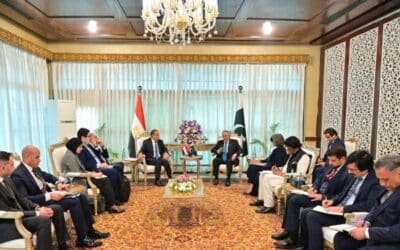
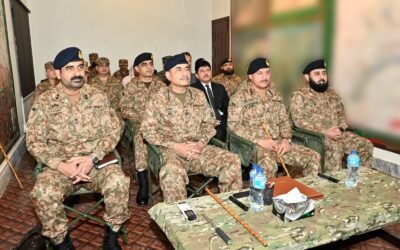
Federal Minister for National Heritage and Culture Aurangzeb Khan Khichi met with the outgoing Ambassador of Kazakhstan to Pakistan, Yerzhan Kistafin, on Friday for a farewell consultation focused on expanding bilateral cooperation across cultural heritage, education, direct transit connectivity, and tourism.
The bilateral engagement highlighted ongoing preparations for an upcoming official visit by the Prime Minister of Pakistan to Kazakhstan, while reviewing a comprehensive joint Action Plan designed to deepen institutional and people-to-people links between Islamabad and Astana.
1. Key Bilateral Agreements and Strategic Initiatives
The meeting finalized several administrative and institutional arrangements aimed at advancing regional integration between South and Central Asia:
-
Direct Flight Connections: Ambassador Kistafin confirmed that direct commercial flights between Kazakhstan and Pakistan are slated to commence next year, establishing a direct air corridor to boost bilateral tourism, trade, and exchange programs.
-
Prime Minister’s Official Visit: Both delegations reviewed logistical and diplomatic preparations for the Prime Minister of Pakistan’s anticipated visit to Kazakhstan next year, which will serve as the anchor for signing expanded bilateral agreements.
-
Pakistani Cultural Delegation: Minister Khichi announced that formal approval has been granted for a Pakistani cultural delegation—comprising a music teacher, a scholar, and two instrumentalist-instructors—to travel to Kazakhstan upon receipt of formal diplomatic invitations.
-
Bilateral Action Plan: Kazakhstan has drafted a comprehensive joint Action Plan detailing wide-ranging cultural activities, described as one of Astana’s most extensive bilateral cooperation frameworks with any partner state.
-
Educational Cooperation: Ambassador Kistafin emphasized Kazakhstan’s ongoing educational exchange programs, reaffirming the continuation of dedicated academic scholarship opportunities for Pakistani students.
2. Institutional Collaboration and Cultural Programming
-
Lok Mela International Participation: Minister Khichi formally invited Kazakhstan to send cultural contingents and artists to future editions of Pakistan’s annual flagship cultural festival, Lok Mela, managed by the National Institute of Folk and Traditional Heritage (Lok Virsa).
-
Joint Performances in Astana: Ambassador Kistafin proposed staging joint musical and theatrical performances during the Pakistani Prime Minister’s visit, leveraging Astana’s major cultural venues, including the Opera Theatre, Ballet Theatre, and National Theatre.
-
Heritage & Archaeological Exhibition: Pakistan proposed hosting a specialized heritage exhibition in Kazakhstan to showcase artefacts from the Gandhara Buddhist civilization, the Indus Valley Civilization, and Islamic historical sites to highlight Pakistan’s historical diversity.
Strategic Analysis: Central Asian Connectivity and Cultural Diplomacy
The farewell engagement between Minister Khichi and Ambassador Kistafin reflects Pakistan’s broader foreign policy imperative to strengthen ties with Central Asian Republics (CARs):
1. Geo-Economic Integration Through Soft Power
As Pakistan seeks to position itself as a trade and transit hub connecting Central Asia to maritime trade routes, soft-power mechanisms—such as direct flight corridors, educational scholarships, and institutionalized cultural exchanges—serve as critical foundations to support economic integration.
2. Institutionalization of Bilateral Mechanisms
By tasking attached bodies like Lok Virsa to execute a structured Action Plan alongside the Kazakh Embassy, the National Heritage and Culture Division is transitioning episodic cultural exchanges into permanent, operational diplomatic channels aligned with high-level state visits.