



Amid ongoing hostilities and volatile maritime tensions across the Middle East, Iran has taken steps to reinforce its defensive posture and expand its operational footprint in the Strait of Hormuz. The developments coincide with expert assessments indicating that Tehran is seeking to disrupt diplomatic pauses to retake strategic initiative.
According to security analysts, Tehran remains skeptical of operational pauses observed by U.S. forces, assessing that temporary lulls in kinetic strikes serve primarily to enable coalition forces to regroup and prepare for subsequent military phases.
Key operational and intelligence developments include:
- Short-Range Defense Procurement: Iran is reportedly expecting an initial shipment of up to 400 Chinese-made shoulder-fired air-defense missile systems (MANPADS) within weeks. The procurement—one of Tehran’s largest air-defense acquisitions since the outbreak of hostilities—is designed to bolster short-range coverage protecting critical infrastructure and military assets.
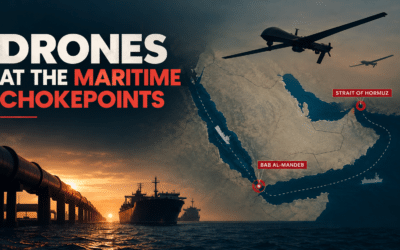
- Interdictions in the Strait of Hormuz: The Islamic Revolutionary Guard Corps (IRGC) announced it intercepted and struck three oil tankers in the Strait of Hormuz. Iranian state media stated the vessels were targeted after navigating what Tehran deemed an “unsafe and illegal route” while ignoring maritime warnings.
- Rejection of Joint Maritime Proposals: Iranian Deputy Foreign Minister Kazem Gharibabadi confirmed that Tehran rejected a proposal by Oman to jointly manage traffic in the Strait of Hormuz on an equal basis. Iran instead offered a counter-proposal where it maintains exclusive management over its territorial lane, granting Oman limited authority over portions of the opposite route.
Critical Analysis
The dual strategy of acquiring MANPADS and maintaining a confrontational posture in the Strait of Hormuz signals Iran’s intention to institutionalize a asymmetric operational environment. By acquiring hundreds of mobile, low-altitude air-defense systems, Tehran seeks to plug tactical gaps exposed during previous airstrikes without relying on large, easily targeted surface-to-air missile batteries.
Concurrently, Iran’s refusal to accept Oman’s joint transit framework—combined with active interdiction of maritime traffic—underscores its resolve to leverage control over the Strait of Hormuz as strategic leverage. By rejecting shared maritime control and maintaining strict operational enforcement along its coasts, Tehran aims to signal to Washington and regional neighbors that any operational pause will not result in an Iranian strategic retreat. However, escalating maritime interdictions increases the risk of unintended escalation, potentially forcing coalition navies into broader escort or freedom-of-navigation operations that could reignite full-scale military conflict.