




From Economic Unrest to Survival Crisis
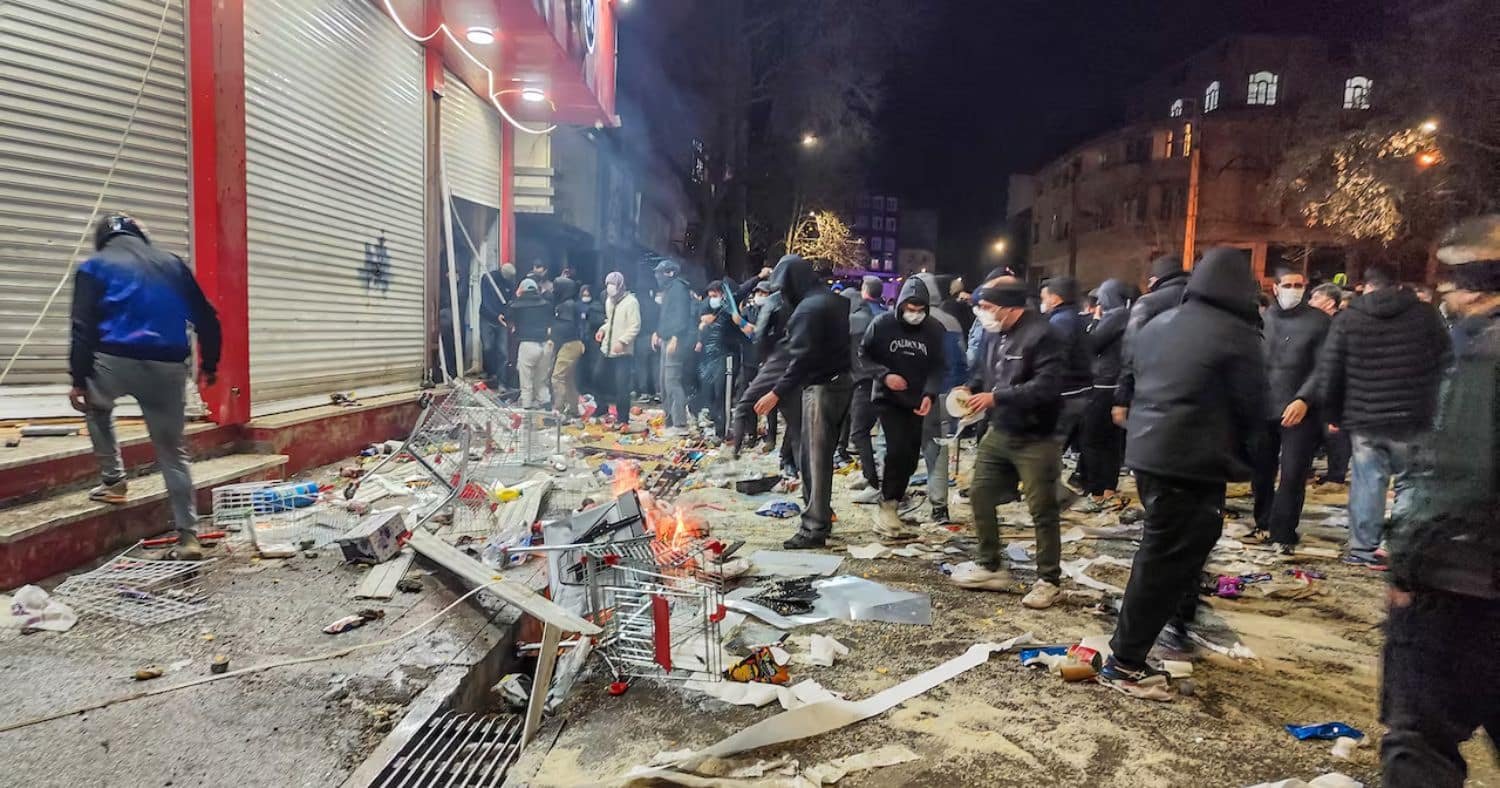
Since late December 2025, Iran has been gripped by widespread protests that have rapidly evolved from economic grievances into a challenge Tehran increasingly sees as a threat to the Islamic Republic’s very survival. What distinguishes these demonstrations from earlier unrest, including 2019 and the notable 2022 “Woman, Life, Freedom” movement is not merely their scale, but the political content of protesters’ demands and the state’s extraordinary response.
Iran’s leaders have historically tolerated unrest sparked by bread-and-butter issues such as price shocks or utility cuts because they could be framed as solvable governance problems. But in January 2026, that tolerance broke when the protests shifted from economic hardship to systemic defiance of the regime itself. That shift, crossing an invisible “red line” is now being met with maximal repression: nationwide internet blackouts, sweeping arrests, lethal force, and rhetoric that signals existential alarm at the heart of the Iranian state.
From Rial Collapse to Nationwide Uprising
The immediate trigger was economic: the Iranian rial plunged precipitously, exacerbating inflation on basic goods. By late December, the currency devalued sharply, knocking the purchasing power of ordinary families while food and essentials became unaffordable. Iranian authorities offered modest subsidies of about $7 per person per month for staples such as rice and pasta, a relief widely seen as utterly insufficient in the face of hyper-inflation and widespread hardship.
What began with market closures and protests in Tehran’s Grand Bazaar soon rippled across the country. By early January, demonstrations were reported in dozens of cities, from Mashhad in the east to Tabriz in the north, with protestors chanting slogans not just about prices but directly against the clerical leadership and Supreme Leader Ayatollah Ali Khamenei. Videos circulating on encrypted networks showed crowds chanting “Death to the dictator!” and demanding political reform beyond economic relief.
This broadening of protest objectives, from immediate grievances to the foundational authority of the regime, is what Tehran’s leadership now perceives as far more dangerous than earlier unrest.
Escalation: Internet Blackout and Brutal Crackdown
On January 8–9, 2026, Iran’s authorities took a dramatic step: a nationwide internet and mobile data blackout that plunged the country into near-total digital silence. Reports from digital monitoring group NetBlocks confirmed the blackout, which restricted access to foreign platforms and obscured independent reporting of deadly crackdowns. State entities justified the blackout as necessary for national security, but human rights observers describe it as a tactic to conceal violence used against demonstrators.
Simultaneously, human rights groups reported a rising death toll as security forces, including the Islamic Revolutionary Guard Corps (IRGC) and Iran’s police, engaged in repeated violent dispersals. According to the Norway-based Iran Human Rights network, at least 51 protesters, including nine children, were killed by security forces in the first thirteen days of unrest, with hundreds more injured. These figures are thought to be conservative, given communication blackouts and repression of independent reporting.
Despite the blackout, thousands continued to demonstrate. Witnesses reported large rallies on Tehran’s avenues and major cities across the country, with chants against the regime becoming more politically charged than earlier in the protest cycle.
Response From the Clerical Establishment
The government’s rhetoric has shifted sharply toward existential alarm. Supreme Leader Ayatollah Khamenei has publicly dismissed the demonstrators as “vandals” and “saboteurs”, accusing foreign powers of stirring unrest and rejecting any suggestion of concessions. France and other Western governments have urged restraint, but Tehran has doubled down on its narrative of internal and external threat.
Iran’s attorney general took an unprecedented legal stance by declaring that those involved in the protests could be labeled “enemies of God”, a charge in Iranian law that carries the death penalty. While the exact number of death sentences or executions remains unclear, this punitive framing underscores a dramatic escalation in how the state interprets the protests: not as civic dissatisfaction but as ideological betrayal.
This hardline posture reflects a leadership that believes the protests no longer pose a governance issue, like negotiating price controls or provincial grievances, but rather a challenge to the legitimacy of the Islamic Republic itself.
You May Like To Read: Saudi Coalition Accuses UAE of Smuggling Separatist Leader Out of Yemen
Why January 2026 Marks a New Phase
There are three main reasons analysts now see these demonstrations as qualitatively different:
1. Breadth of Participation: Protests have occurred in dozens of cities and all major provinces, involving students, workers, shopkeepers, professionals, and families. This broad social participation echoes, but exceeds, earlier protest waves.
2. Political Content: Slogans and behaviour have moved beyond economic grievances toward calls for systemic change and even explicit rejection of the clerical system, including chants and symbols referencing pre-1979 Iranian monarchy in some gatherings.
3. Regime Fear of Narrative Loss: The nationwide internet blackout, combined with lethal force and legal threats, demonstrates that the regime perceives it has lost control, not just of protests, but of how those protests are seen both domestically and abroad. Reducing communication to near zero is a drastic method reserved for moments of acute threat.
These elements, common across various sources, mark a departure from prior unrest that remained within the state’s capacity to manage. The current wave threatens the ideological legitimacy of the regime in a way earlier protests did not.
The Regime’s Survival Calculus
Iran’s leadership now appears to believe that the protests have crossed a decisive threshold, from criticism of policy failures to challenge against the Islamic Republic’s authority itself. Under Iran’s theocratic structure, where governance is intertwined with ideological legitimacy, this shift is particularly significant. Criticism of policy can be tolerated; rejection of the system is treated as rebellion.
From the regime’s perspective, if slogans no longer call for fixes but denounce the foundation of clerical rule, the response escalates: lethal force, stringent legal sentencing, information blackouts and hardline rhetoric. In this frame, the protests have evolved from discontent to a survival crisis.
Looking Ahead: Uncertain Stability
Despite intense repression and information suppression, protests have continued. International attention remains high, and diaspora voices, including exiled figures like Reza Pahlavi, have amplified calls for political change.
For Iran’s neighbours, including Pakistan, developments matter not only for regional stability but also in terms of economic ties, refugee flows, and diplomatic engagement. Most importantly, the events of January 2026 may be remembered as the moment when public demands in Iran moved beyond bread-and-butter issues to a fundamental contest over the future of the Islamic Republic itself.
You May Like To Read: Iran Shuts Down Internet as Streets Erupt, Testing the Reach of an Exiled Prince
Check out our latest video: