


Imagine a vibrant mosaic of factories, bustling logistics hubs, and international investors walking among gleaming showrooms—yet all within defined boundaries where regulations are seamless and incentives plentiful. This is the world of Special Economic Zones (SEZs), modern-day economic oases designed to turbocharge industrialization and draw global capital. They are more than just designated zones—they are engines of employment, technology, and export growth.
What Is an SEZ?
At its core, an SEZ is a geographically defined region where business and trade laws differ from the rest of the country. Governments often grant these zones special incentives: tax holidays, streamlined customs procedures, relaxed labour regulations, and dedicated infrastructure. Picture them as economic testbeds or launchpads where innovation, investment, and industry can scale rapidly under protective, pro-investor policies—while still contributing to national economic goals.
How SEZs Drive Economic Growth
Globally, SEZs have proven their worth again and again. Examples abound:
- Shenzhen, China: Once a fishing village, Shenzhen transformed into a global manufacturing and tech powerhouse through SEZ policies in the 1980s. Within decades, innovation and exports soared. Today it stands as the heart of China’s bustling industrial growth and as a role model for the world to see.
- Dubai’s Jebel Ali Free Zone: This logistics and trade hub now hosts thousands of international companies, fueling exponential growth in the UAE’s non-oil economy. It is a case study in itself that the rest of the middle east now envisions to replicate to diversify and end their reliance on oil money.
- Malaysia’s Penang Free Zone: Focused on electronics and electrical manufacturing export growth, drawing giant firms with its advantages. Penang has put Malaysia on the global map in the electronics market.
These zones combine infrastructure, incentives, and ease of doing business to activate foreign direct investment, generate employment, develop skillsets, and boost export competitiveness. Their development has led their countries to develop robust businesses and global footprint in a short span of time, making SEZs a model of success.
Pakistan’s SEZ Journey under CPEC and National Vision
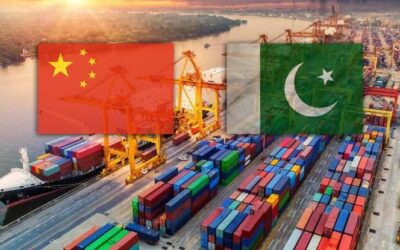
Pakistan formally adopted the SEZ model in the 2010s, but the real acceleration came through the China-Pakistan Economic Corridor (CPEC) initiative. Under CPEC, over 30 SEZs were proposed across provinces, starting with flagship ones:
- Rashakai SEZ (Khyber Pakhtunkhwa) – Focused on light engineering, automotive parts, and warehousing.
- Gadoon Textile SEZ (Khyber Pakhtunkhwa) – Revitalizing the state‑owned Gadoon Textile Mills.
- Hattar Industrial Estate (Punjab) – A public venture transitioning into SEZ status.
- Dhabeji SEZ (Sindh) – A key node for logistics and heavy industry near Karachi port.
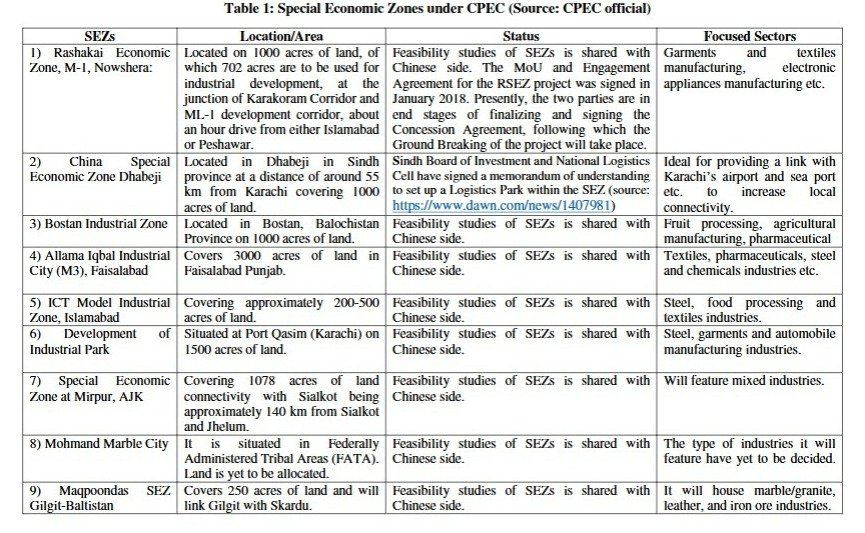
Report Title: SEZs for Sustainable Development in Pakistan | Report Author(s): Hina Aslam, Maaz Sakib and Amna Sandhu
Beyond CPEC, the government has established All-Pakistan SEZs through Pakistan SEZ Authority (PSEZA), with zones such as:
- Khawaja Intercity SEZ, Faisalabad – Textile, apparel, and food processing.
- Jiwani SEZ, Balochistan – Coastal logistics and fisheries.
- Gwadar SEZs – A series of zones aligned with maritime, energy, and trade ambitions.
This multi‑pronged strategy aims at equitable regional development, employment generation, foreign investment attraction, export enhancement, and technology transfer.
What Pakistani SEZs Offer to Business
To woo investors, Pakistan packs its SEZs with incentives:
- Up to 10-year tax holiday on corporate income and imports of machinery/raw materials.
- Duty-free access on imported assets for SEZ operations.
- Simplified customs and clearance, with one-window operation under the National Single Window.
- Infrastructure ready-made—roads, water, electricity, waste treatment—often at subsidised or seamless delivery.
- Access to China knowledge networks, especially in CPEC SEZs.
- Labor flexibility, enabling easier hiring/firing, or labour cost management.
- Land lease models to reduce entry costs for investors.
Combined, these benefits can reduce cost of operation dramatically—by 30% or more compared to firms outside SEZs. Not only that, but the strategic locations of these SEZs promise the development of often overlooked peripheries, extending development outside the giant urban centers. This solves major issues of population saturation while also providing with promising returns on investment.
Early Wins and Success Stories
Though still evolving, some Pakistani SEZs have recorded encouraging progress:
- Industrial engagement: Over 500 letters of intent issued by mid-2025, with foreign and domestic investors committing hundreds of millions in investment.
- Job creation estimates: Expectations of 50,000 direct and 150,000 indirect jobs across flagship zones.
- Export pipeline: Rashakai and Gadoon zones have textile and garment investors targeting Central Asian and Middle Eastern markets.
Additionally, Gwadar Industrial Park has attracted energy, logistics, and fisheries firms focused on port-linked exports.
These pockets of success serve as proof-of-concept. They show that the SEZ model can catalyse activity—when backed by political commitment, execution clarity, and service orientation. While policy discontinuity in the recent past set back Pakistan’s progress on the SEZ model by a lot, the recent revival of this strategy once again gives a glimmer of hope for future investors.
Unlocking Further Investment: Path Ahead
For Pakistan’s SEZ model, the potential remains vast, however yet to be materialized, still require overcoming several bottlenecks:
- Land acquisition delays: Zoning requires clear titles and expedited land settlement. Slow progress, much like anywhere else, deters investors.
- Infrastructure gaps: Some SEZs still lack reliable power, natural gas, water, or roads. Investors expect plug-and-play readiness and that can only be provided with strategic developmental and logistical support by the government.
- Regulatory complexity: Despite one-window, investors encounter multiple line agencies. Further streamlining is needed to inspire confidence.
- Institutional strength: Provincial SEZ authorities need capacity-building on project management, marketing, and investor services, something that the country has been failing to do for quite some time.
- Financial backing: Development also requires upfront infrastructure investment. Some sort of fiscal, concessional finance, or World Bank-level concessionary loans. Under the umbrella of the Special Investment Facilitation Council (SIFC), Pakistan is expected to overcome this problem very soon.
- SME inclusion: SEZs must dovetail large anchor tenants with vendor parks and SMEs to build local supply chains. Lowering the bar for entry and providing equal opportunity for growth to all kinds of investors.
Refreshingly, to resolve these gaps, the government is already acting:
- A Fast-Track SEZ Approval Cell has been created by the Prime Minister’s Office to manage approvals within 30 days.
- PSEZA is working on a ‘Zone Services Model’ offering turnkey office and business regulatory assistance to investors.
- Pakistan is attracting IFC and ADB grants to bridge infrastructure finance and risk-sharing with private investors.
- A new Local Content Programme is being drafted to ensure SMEs can qualify for vendor support.
- Inter-provincial SEZ forums facilitate coordination across federal and regional entities—avoiding duplication.
If executed well, these reforms will not just unlock current zones—but build confidence in future ones.
The Way Forward
SEZs are not a panacea; they require sustained political will and efficient execution. Across the world, zones stagnate due to bureaucratic drag, and red tape-ism, misuse, or lack of competitiveness. Pakistan must avoid these pitfalls.
To succeed, the SEZ vision needs:
- Transparent data disclosure—announcing number of investors, jobs created, exports generated, and land acquired for investors.
- Investor care teams—offering timely redressal from tax to utilities and on-ground issues.
- Skills readiness programs—in partnership with technical colleges to prepare labor locally.
- Anchor tenant strategy—each zone requires 1-2 trusted enterprises to attract ecosystem development.
- Benchmark-based KPIs—tracking zone health by metrics like investment per acre, export value per employee, etc.
Conclusion
Pakistan’s SEZ policy stands at a pivotal juncture. If Pakistan can connect its economic ambitions with modern SEZ best practices, its zones can attract billions in investment, diversify its industrial base, and generate innumerable jobs. What began under CPEC now needs national momentum and smart implementation. SEZs can become the hubs where Pakistan’s next economic narrative takes root—factories humming, exports climbing, and local livelihoods brightening. By combining competitive incentives, service orientation, and honest governance, SEZs may well deliver the industrializing Pakistan dreams of.