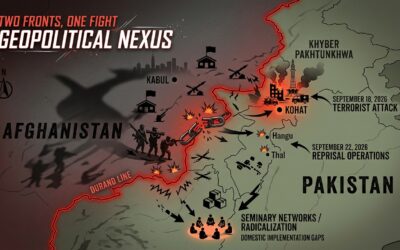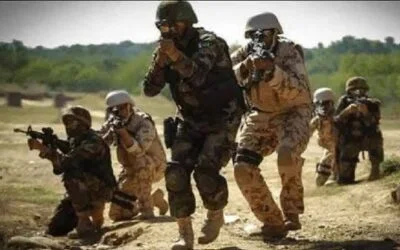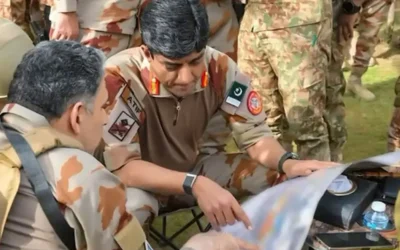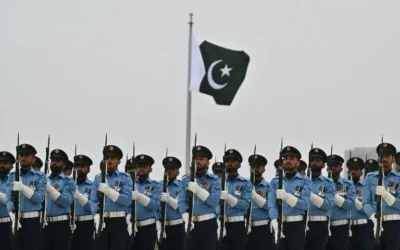



Despite multiple reforms and high-profile launches, Pakistan’s National Counter Terrorism Authority (NACTA) continues to struggle with key structural and inter-agency coordination failures. The result is a counterterrorism ecosystem segmented across civilian law enforcement, intelligence agencies, and military operations—undermining unified, strategic responses.
1. Mandate vs. Reality
NACTA was formally empowered in 2013 under an Act of Parliament, with a clear mandate: collate and disseminate intelligence; draft comprehensive CT strategies; coordinate threat assessments; and liaise with stakeholders, including provincial entities. In 2025, it launched the National Intelligence Fusion and Threat Assessment Centre (NIFTAC), alongside six provincial PIFTACs, with over 50 agencies engaged in shared threat assessment.
Yet despite these mechanisms, intelligence sharing remains deficient. Agencies diligently guard their own turf, and institutional rivalries persist diluting NACTA’s convening power and limiting actionable collaboration.
2. Bureaucratic Silos and Civil‑Military Paradox
Coordination within Pakistan’s security architecture is inherently constrained by civil-military divergence:
- NACTA’s Board of Governors includes civilian leadership (Interior, Finance, Law) and intelligence chiefs, but civilian authority is often overshadowed by security establishment control.
- Historically, National Security Council meetings—intended to align civilian-military strategy—have been irregular or sidelined, constraining integrated decision-making.
Former NACTA coordinator Tariq Pervez, resigned in 2010 citing persistent obstruction by both civilian and intelligence ministries in passing the enabling legislation—which delayed NACTA’s legal activation for years. This underlines how structural politics impede full institutionalization.
3. Intelligence Fusion: Promise vs. Practice
While NIFTAC and PIFTACs aim to replicate international fusion models (such as the U.S. NCTC), Pakistan’s experience highlights key gaps:
- Technical and legal challenges restrict information sharing between military intelligence, and civilian law enforcement (e.g. CTD, FIA).
- Evidence shows that CTD-led operations may proceed with limited prior intelligence coordination; likewise, agencies often operate in silos around high-profile incidents (e.g. Karachi raids, Sahiwal encounters).
- UN and EU evaluations of Pakistan’s CT efforts underscore functional deficiencies in coordination, investigative processes, and the criminal‑justice apparatus.
4. Policy Cycling and Strategic Incoherence
Pakistan’s CT approach remains reactive and episodic. Military operations—such as Azm‑e‑Istehkam and Zarb‑e‑Azb—often reset operational baselines, but without lasting institutional change or inter-agency reforms. This cyclical reboot mentality limits NACTA’s ability to sustain long-term coordination. Policy frameworks are often supplanted rather than institutionalized, resulting in each new leadership phase reconfiguring structures rather than consolidating prior reforms.
5. Structural Impediments to Unified CT Response
Several core obstacles persist:
- Legal Ambiguity: Despite the NACTA Act, operational authority is weak. Law enforcement and intelligence agencies interpret their own jurisdiction differently.
- Institutional Resistance: Civilian leaders lack enforcement power to compel agencies such as CTD, FIA, and ISI into seamless collaboration.
- Civil-Military Asymmetry: Military intelligence often acts parallel to civilian structures, limiting full integration under NACTA.
- Resource and Capacity Gaps: NACTA lacks specialist analytic capacity, investigative power, and enforcement mechanisms. Provinces retain distinct CTDs with variance in capacities and transparency.
- Weak follow-through: Action plans drafted by NACTA are rarely translated into executable operations or legal reforms due to fragmented accountability chains.
6. Case Studies Illustrating the Failures
- Bannu CTD Siege (Dec 2022): Militants overtook a CTD facility in Bannu. Although the military (Special Service Group) resolved the siege, initial intelligence on the attackers reportedly did not arrive in time due to intelligence fragmentation and delayed fusion between agencies.
- Karachi Raid (July 2025): Punjab CTD claimed success in targeting militants linked to the FAK and in protecting Chinese nationals. The operation was lauded internally, but coordination with federal intelligence and NIFTAC remains undocumented, highlighting continuing information silos.
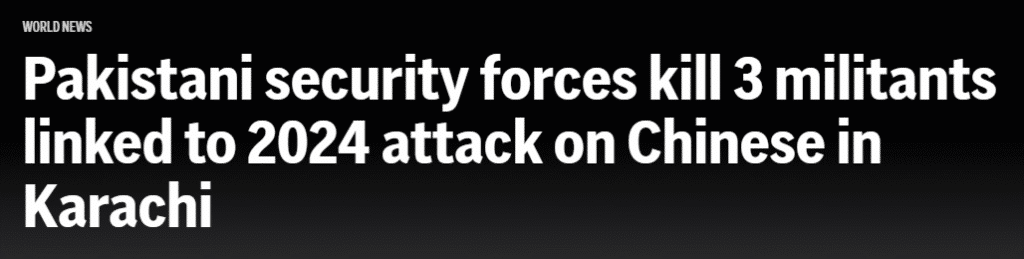
Source: AP News
Navigating the Coordination Quagmire
NACTA’s institutional trajectory reveals a troubling pattern: ambitious structural design hampered by entrenched bureaucratic resistance. Despite periodic leadership changes and rhetorical emphasis, the agency’s ability to harmonize intelligence-sharing, coordinate operations, and enforce strategic coherence remains limited.
Addressing these coordination deficits will require far more than organizational tweaks—it demands political commitment to enforce NACTA’s authority, align incentives for compliance, and systematically empower civilian oversight within the CT enterprise.
Absent such reforms, Pakistan’s counterterrorism architecture will continue to reboot in cycles—repeating past failures and lacking the agility required to confront evolving threats effectively.