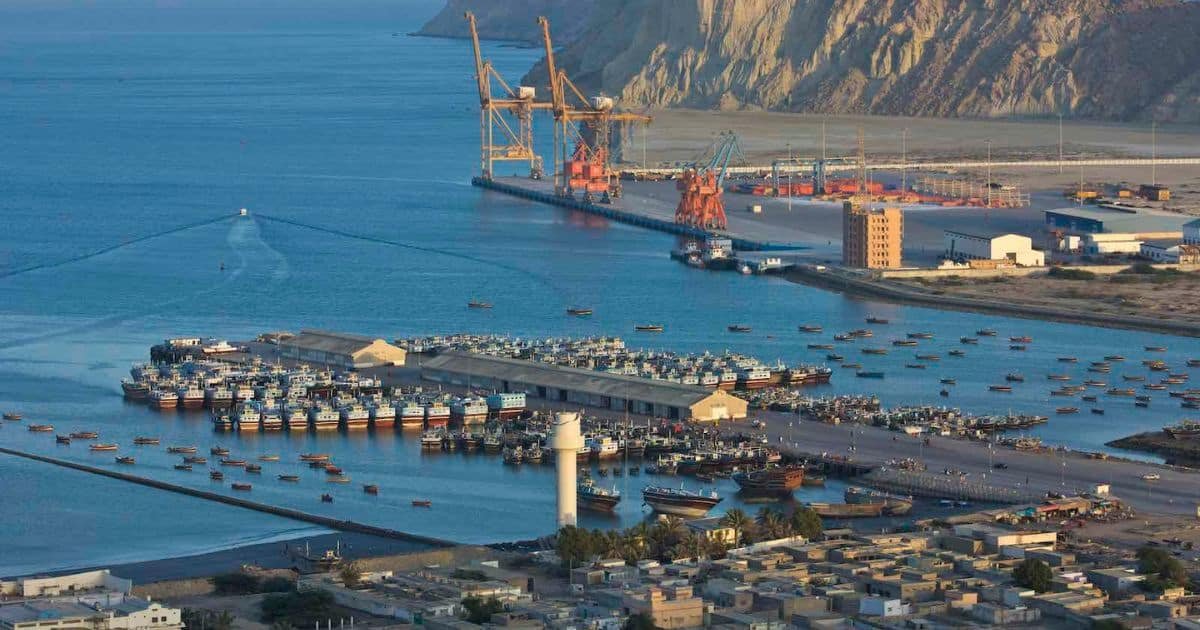





Pakistan and Kazakhstan are poised to enter a new era of strategic cooperation, with a landmark Gwadar Port access deal anticipated to be signed during the upcoming visit of the Kazakhstani President in November this year. This agreement is set to be a cornerstone of a burgeoning partnership, designed to provide Kazakhstan, a landlocked nation, with a vital gateway to global markets via Pakistan’s deep-sea ports.
Sources confirm that a high-level delegation from Kazakhstan is scheduled to arrive in Islamabad in the second week of September to finalize the details of the agreement. While Kazakhstan has expressed interest in establishing a goods terminal at Karachi Port to facilitate exports to the European Union and the United States, Pakistan is keen on encouraging a similar establishment at Gwadar Port. This strategic alignment aims to fully utilize the potential of the Gwadar Free Zone and enhance the port’s role as a regional trade hub.
A key meeting held between Kazakhstan’s Ambassador Yerzhan Kistafin and Federal Minister for Maritime Affairs Muhammad Junaid Anwar Chaudhry on Tuesday highlighted the strong mutual interest in expanding cooperation. The federal minister proposed several joint ventures at both Karachi and Gwadar ports, emphasizing the vast potential for partnerships in the Gwadar Free Zone. These initiatives are a clear signal of Pakistan’s dedication to leveraging its strategic port infrastructure to provide seamless trade access for Kazakhstan and the broader Central Asian region.
Ambassador Kistafin welcomed these initiatives, expressing Kazakhstan’s eagerness to use Pakistani ports as transit hubs. He announced that a ministerial-level delegation, led by Kazakhstan’s Communication Minister, who also oversees maritime affairs, will soon visit Pakistan for in-depth discussions on maritime trade and logistics.
The federal minister further outlined the critical role of Pakistani ports as gateways offering Central Asian nations direct access to lucrative markets in the Persian Gulf, Africa, and Southeast Asia. He reiterated the maritime sector’s commitment to becoming a regional trade hub by adopting innovative approaches and reinforcing international partnerships.
The upcoming visit of the Kazakh delegation is expected to accelerate progress on these joint ventures, strengthen bilateral ties, and facilitate trade through collaborative efforts in maritime infrastructure development, logistics, and the blue economy.
A New Horizon for Pakistan’s Geopolitical, and Economic Landscape
The potential Gwadar Port access deal between Pakistan and Kazakhstan represents a significant milestone in Pakistan’s foreign policy and economic strategy. This move, if finalized, would have profound implications across multiple dimensions, positioning Pakistan as a pivotal player in regional connectivity and trade.
Harnessing Pakistan’s Strategic Location
For decades, Pakistan’s geopolitical importance has been largely defined by its location at the crossroads of South Asia, Central Asia, and the Middle East. However, this potential has often been underutilized. The Gwadar Port access deal is a clear manifestation of Pakistan’s proactive approach to capitalizing on its strategic position. By offering a deep-sea port to a landlocked nation like Kazakhstan, Pakistan transforms from a mere transit country into a central trade facilitator. This role elevates Pakistan’s strategic importance and economic leverage in the region.
Economic Integration with Central Asia
The Central Asian Republics (CARs) are rich in natural resources and offer immense potential for trade. However, their landlocked status has historically limited their access to global markets. This agreement provides a direct, cost-effective, and secure route for Kazakhstani goods, bypassing traditional and often longer routes. This will not only boost Pakistan’s port revenues but also create a new trade corridor that can be expanded to include other CARs. The proposal to explore road and rail linkages further solidifies this vision, creating an integrated logistics network that would foster greater economic interdependence between Pakistan and Central Asia. This is a crucial step towards realizing the long-held vision of regional economic integration and shared prosperity.
Bolstering the China-Pakistan Economic Corridor (CPEC)
This potential deal is a significant validation and a practical extension of the China-Pakistan Economic Corridor (CPEC). While CPEC has primarily focused on connecting China’s western regions to Gwadar, the inclusion of Kazakhstan and other Central Asian states broadens its scope and regional relevance. The integration of Central Asian trade routes into CPEC’s framework would transform it from a bilateral project into a multi-regional connectivity initiative. This diversification strengthens the project’s viability and strategic importance, making it a powerful magnet for regional economic activity.
Military Diplomacy, and Soft Power
Beyond the economic benefits, this agreement is a masterstroke in military diplomacy and the use of soft power. A strong economic partnership based on mutual benefit fosters political and strategic alignment. As trade ties deepen, so will the need for security cooperation to protect the trade routes. This provides a natural and organic basis for closer military-to-military relations, joint security initiatives, and shared intelligence on regional threats. By offering a lifeline to Kazakhstan’s economy, Pakistan builds a powerful relationship based on trust and mutual benefit, which is often more resilient than traditional alliances. This move also serves to counter the influence of other regional players and enhances Pakistan’s standing as a reliable and constructive partner.
Implications for Geopolitics, and Regional Dynamics
In a broader geopolitical context, this deal could have significant ramifications. It offers a counter-narrative to other proposed trade routes and connectivity projects in the region, establishing Gwadar as a competitive and viable alternative. By attracting Central Asian nations to its ports, Pakistan strengthens its position in the emerging multipolar world order. This strategic pivot towards Central Asia is a forward-looking step that recognizes the shifting power dynamics and the growing importance of regional connectivity in global trade.
In conclusion, the potential Gwadar Port access deal with Kazakhstan is not merely a commercial transaction; it is a profound strategic move. It is a testament to Pakistan’s vision of becoming a regional economic hub, utilizing its unique geographical advantage to foster trade, promote stability, and forge stronger diplomatic and strategic partnerships. This initiative, if successful, will open a new horizon for Pakistan’s economic prosperity and geopolitical influence for years to come.
You May Like To Read: